Generative UI and the end of the interface as a place
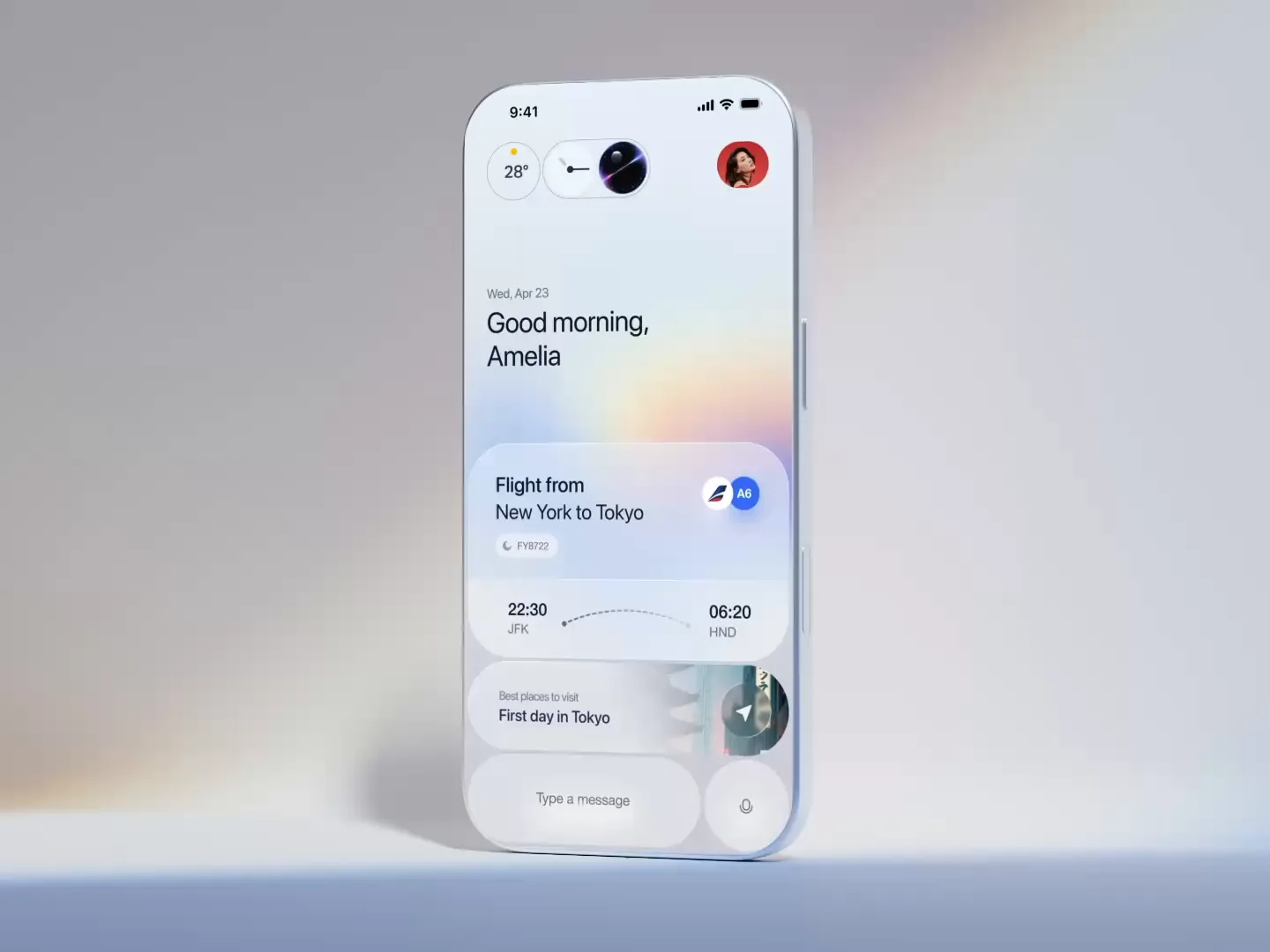
For about fifty years, using a computer meant learning a map. Somebody drew the menus and screens ahead of time; you memorized where things lived and went there. A generative interface turns that around. The system works out what you mean, builds a screen for that one moment, then throws it away. At Brain.AI it took us ten years to get from the first sketches to an operating system sold over the counter in Japan. Somewhere along the way the design work stopped being about screens and started to look a lot like grammar. The hard part moved too, from doing things to checking what got done.
The map and the translation
Since the first graphical interfaces, software has presented itself as a place you visit. Windows, folders, menus, a grid of apps. That wasn't a mistake. It solved something real. Donald Norman wrote about two gulfs between a person and a machine.1 One is the gulf of execution, the distance between what you want and the buttons the system gives you. The other is the gulf of evaluation, the distance between what the system actually did and what you can tell it did. Menus and icons were a bridge over the first one. Every capability got a visible handle you could find and press.
The toll for crossing was translation. Want a flight? First you need to know that flights live in an app, that the app lives on your third screen, and that this particular app wants dates before seats. Every interface drawn in advance makes you restate your goal in the software's vocabulary. We all paid that toll for so long that we stopped seeing it.
J. C. R. Licklider imagined a different deal back in 1960: people and computers thinking together, each doing the part it's good at.2 It didn't go that way. For sixty years the translating stayed with us. Generative UI is the moment it finally moves over to the machine.
A result, not a place
A generative interface gets built for one request. You say what outcome you want; the system grabs the parts that outcome needs, lays them out, and lets them go when the job is done. Nothing on that screen existed before you asked. Very little of it survives the answer.
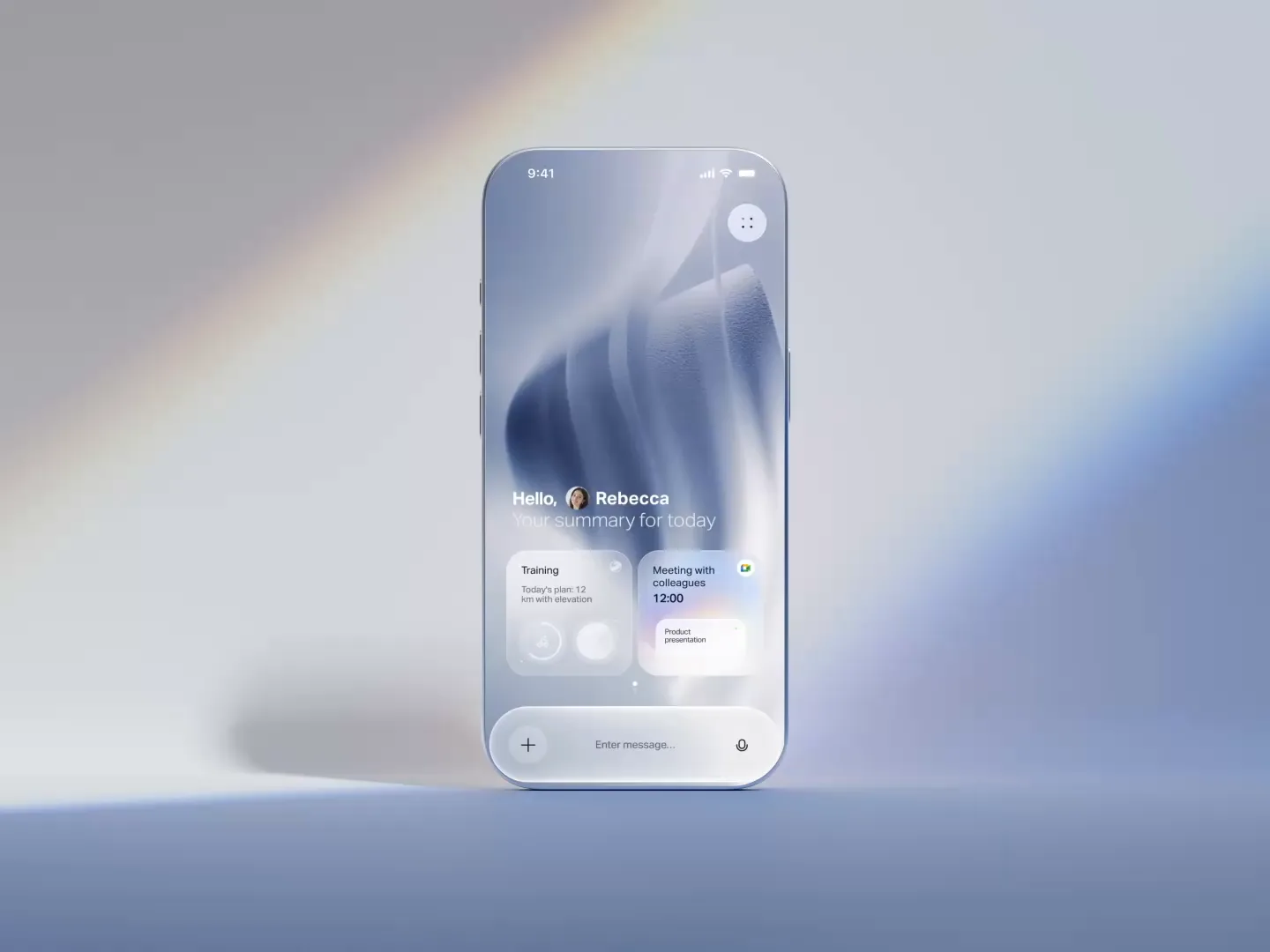
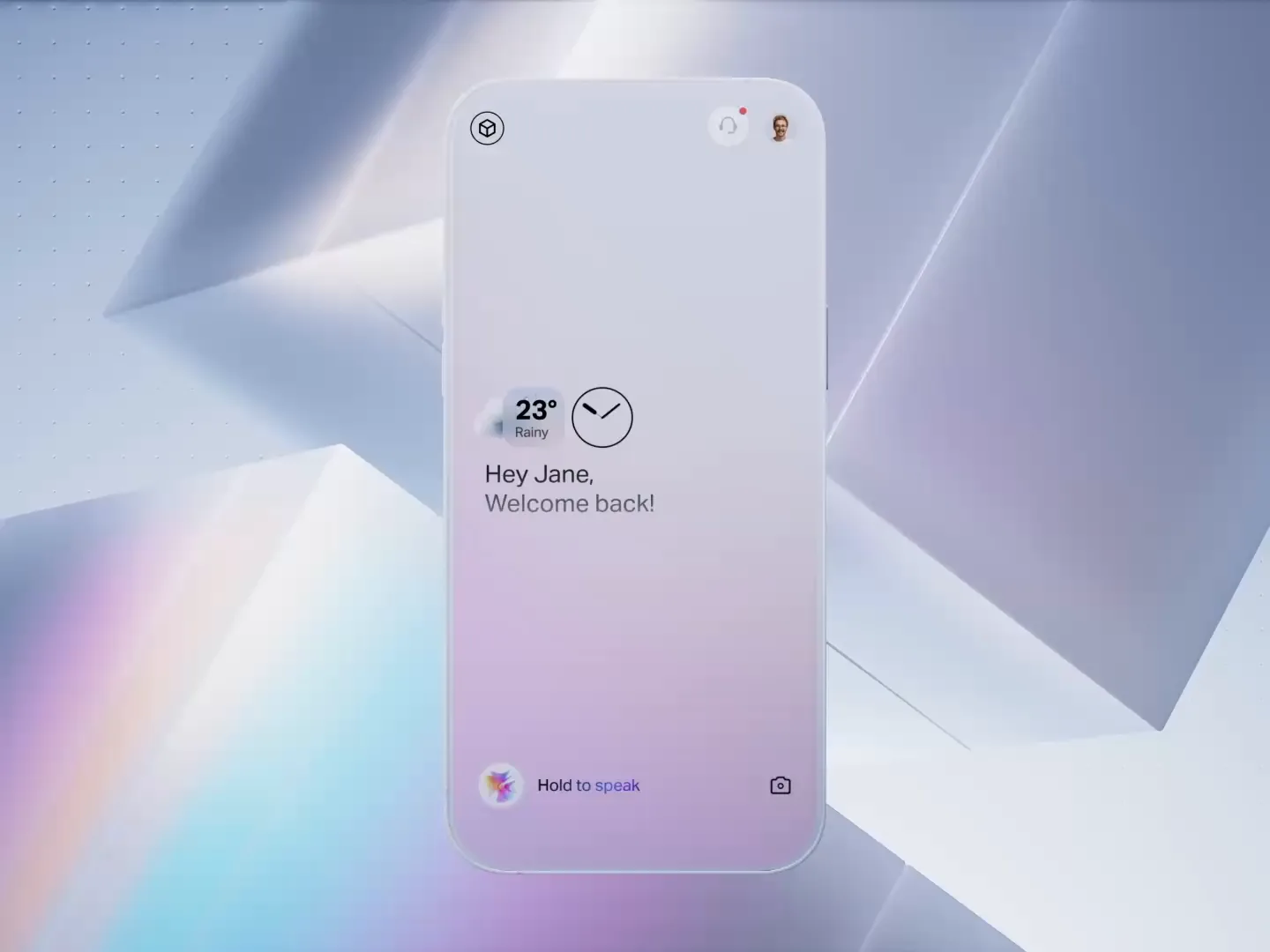
The generative launcher for an AI phone OS has no grid of apps at all. Its home screen takes shape around whatever conversation is going on and quietly rearranges itself when the conversation wanders off. The interface becomes a result, not a place. People stop asking which app to open. They just ask for the thing they wanted.
From a circle to an operating system
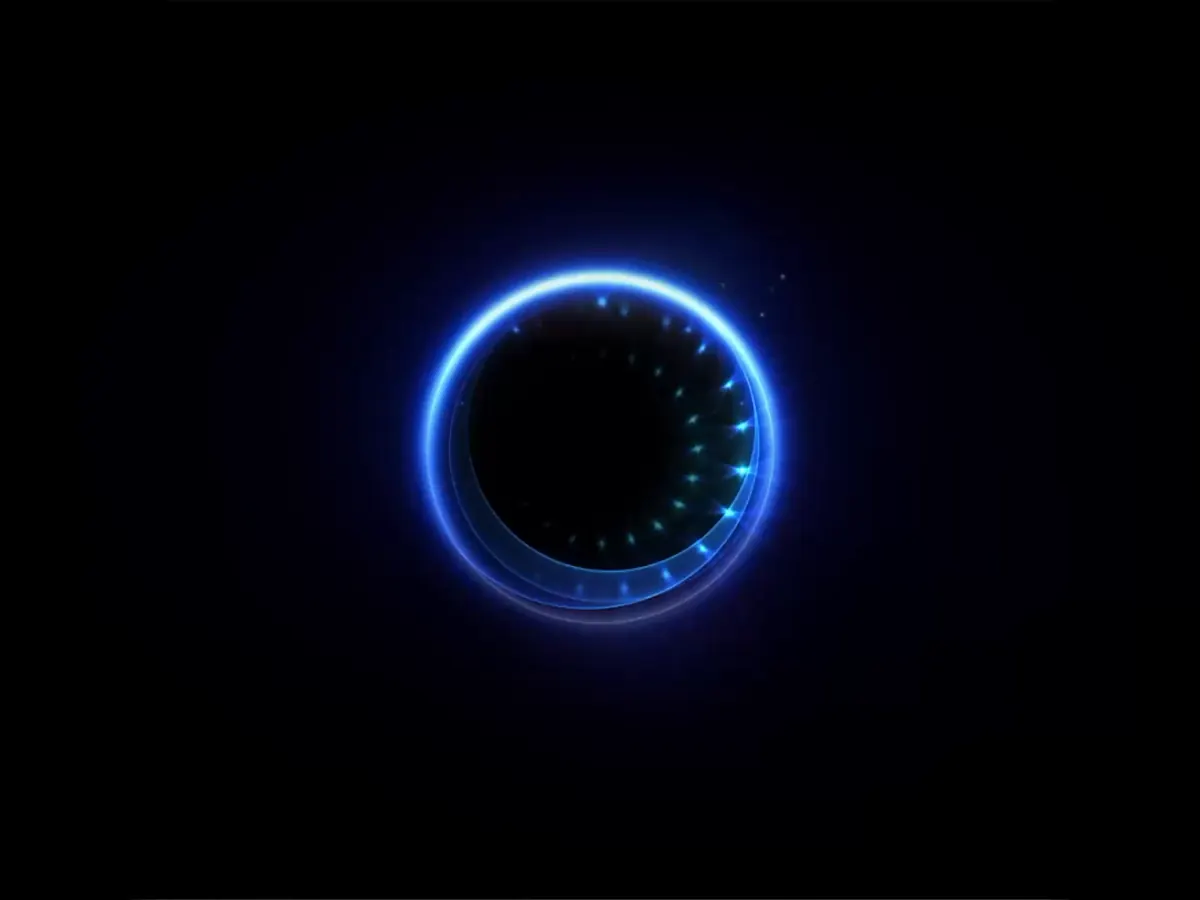
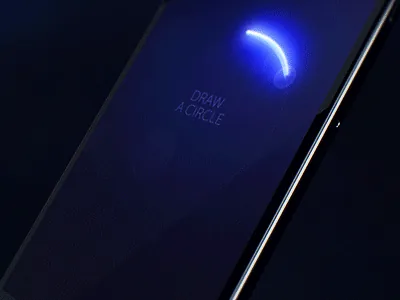
We began the generative interface studies at Brain.AI in 2016, a year after Jerry Yue founded the company. The first question was tiny. What goes where a form would normally go? One early product opened by asking you to draw a circle on the phone with your finger. No fields, no keyboard, just a gesture. That circle stuck around. Years later it came back as the Natural OS mark: a ring with a small dot.
In 2019 the first generative interface went public, inside the Natural app. The rule fits on a sticky note and took years to build: you say what you want, and the interface is generated from that. By 2021 one surface was doing a lot of work. In the voice interface for Natural, booking a flight, shopping, ordering food and checking your calendar all came out of the same surface, which bent itself into a new shape for every request.
Then the target moved from answering to finishing. Ask for a vacation in plain words and the booking flow for Natural comes back with a whole Hawaii plan, flights and things to do laid out on a globe and a calendar. In Natural search, something you type like an ordinary search ends as a finished booking, and you never leave the screen. In 2024 we showed an app-free AI phone with Deutsche Telekom and Qualcomm at Mobile World Congress. In April 2026 Natural OS shipped on the Natural AI Phone, which SoftBank put into more than 5,000 stores across Japan.
Mark Weiser wrote in 1991 that the most profound technologies are the ones that disappear.3 Looking back, those ten years were one long, stubborn experiment in making the app disappear without losing a single thing the app was for.
Infinite use of finite means
Wilhelm von Humboldt said language makes infinite use of finite means.4 Give someone a few thousand words and a grammar and they'll say things nobody has said before. Generative interfaces are built the same way, and that changes the job more than most designers expect. You can't draw the screens anymore. There are too many, and most of them will exist exactly once, for one person, for a few seconds. What you design instead is a vocabulary of parts, a grammar for putting them together, and a very firm opinion about what the system must never say.
Language also tells you what can't move. People get around software by remembering where things are. Experienced users reach for a command where it was yesterday, without looking.5 Change the layout every time and that memory goes, and expertise goes with it. So in Natural OS the sentence is generated and the grammar sits still. The mark stays where it is. So does the place where you ask, and so does the shape of a card. In voice input for Natural search the symbol moves with your voice, but search itself doesn't budge from its spot on the home screen.
The gulf moves
The catch took us longer to see. Generative UI shrinks the gulf of execution down to one sentence, and it widens the gulf of evaluation by about the same amount. When you tap through a booking yourself, you see every step. When the system builds and completes it from one request, the steps happen somewhere out of sight. You're handed a result you never watched being made, and you're expected to trust it.
That's the other half of the design problem, and in my view the harder half. How do you make the machine's work readable afterwards, and, when it matters, while it's still going on? In thinking mode, a request for a flight to Tokyo is built on screen in visible stages, so the reasoning can be followed before anything gets booked. In Mind Space, whatever the agent knows about your plans and interests is laid out in the open, as cards you can actually read.
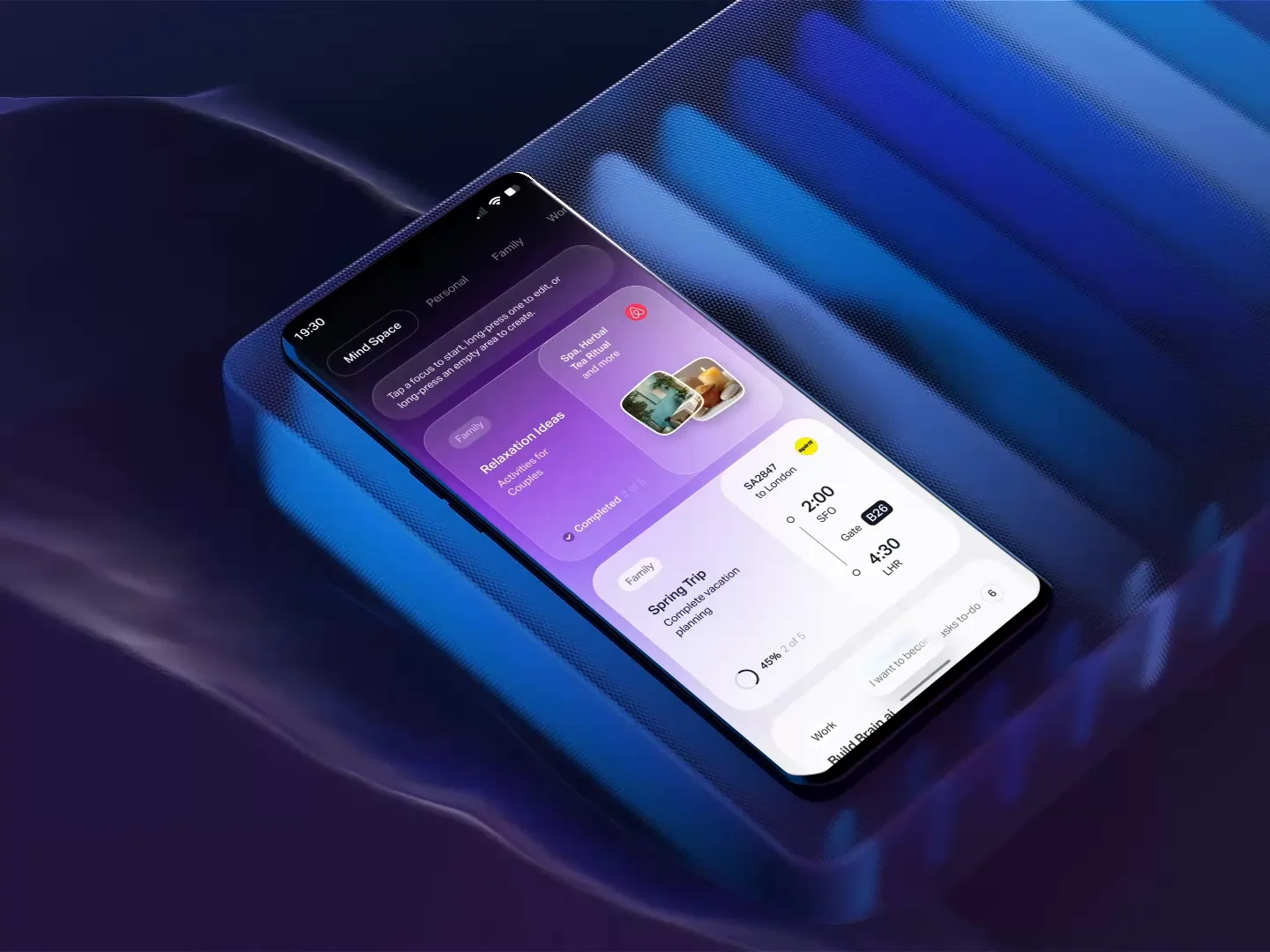
The screen stops being where the work happens. It turns into the receipt. What that receipt owes you deserves an essay of its own, so it has one: The autonomy contract.
Abundance and refusal
Herbert Simon noticed in 1971 that a wealth of information creates a poverty of attention.6 Generation pulls the same trick one level up. When a model can produce a thousand plausible layouts, answers or pictures for free, plausible stops being worth anything. Judgment is the scarce thing now: knowing which one is right, and making sure the other nine hundred and ninety-nine never see daylight.
In practice that boils down to three habits.
- Refusal. With generative tools, design is what remains after refusal. The other answers cost nothing. The right one still costs judgment.
- Intent first. Begin with what a person means, never with a screen. An interface is an answer; intent is the question. Once the question is clear, the answer can take any form, or none.
- Make it run. An idea about intelligence that has never run is only a hypothesis. A working system is an argument.
Who holds the moment of intent
None of this stays inside the design team. When someone asks for an outcome instead of opening an app, whatever interprets the request also decides which service gets the job. The app grid was a shelf, and every app on it was fighting for eye level. An intent layer acts for you, and apps turn into middlemen it may or may not bother to call. Whoever composes the interface ends up composing the market behind it.
That's why generative UI has turned into a question of industrial strategy and not only of design. It was the subject of a 2025 talk at the OS Summit in Florence, Generative UI and the next battle for global tech leadership.
Open questions
Ten years of building answered some questions and made others sharper. These three are still open, at least for me.
- How much of a generated screen should stay the same from one request to the next, so people can still get good at it?
- When an interface is generated from a misunderstanding, do you fix the screen, or say again what you meant?
- When several services could do the job, who checks the choice an intent layer makes on your behalf?
The principles behind all this, from Heidegger's hammer to the extended mind, are on the Philosophy page. The work itself is in Work.
References
- Norman, D. A. (1986). Cognitive engineering. In D. A. Norman and S. W. Draper (Eds.), User Centered System Design: New Perspectives on Human-Computer Interaction (pp. 31-61). Lawrence Erlbaum Associates.
- Licklider, J. C. R. (1960). Man-computer symbiosis. IRE Transactions on Human Factors in Electronics, HFE-1, 4-11.
- Weiser, M. (1991). The computer for the 21st century. Scientific American, 265(3), 94-104.
- von Humboldt, W. (1836). On Language: On the Diversity of Human Language Construction and Its Influence on the Mental Development of the Human Species. Trans. P. Heath, ed. M. Losonsky. Cambridge University Press, 1999.
- Cockburn, A., Gutwin, C., Scarr, J. and Malacria, S. (2014). Supporting novice to expert transitions in user interfaces. ACM Computing Surveys, 47(2), 31.
- Simon, H. A. (1971). Designing organizations for an information-rich world. In M. Greenberger (Ed.), Computers, Communications, and the Public Interest (pp. 37-72). Johns Hopkins Press.